Introduction
A great European experience does not always need a famous landmark. Sometimes, a local concert or small festival creates the best memory.
You might enjoy a food event in one city. You could join a creative workshop in another. A business conference may even help you build useful professional contacts.
Europe offers many activities for different interests. Yet finding the right event can take time.
Visitors need clear details about dates, venues, ticket prices, and entry rules. Organizers also need simple ways to present their events.
MyEventsNow EU brings event discovery and management together. It connects attendees, organizers, venues, and businesses across Europe.
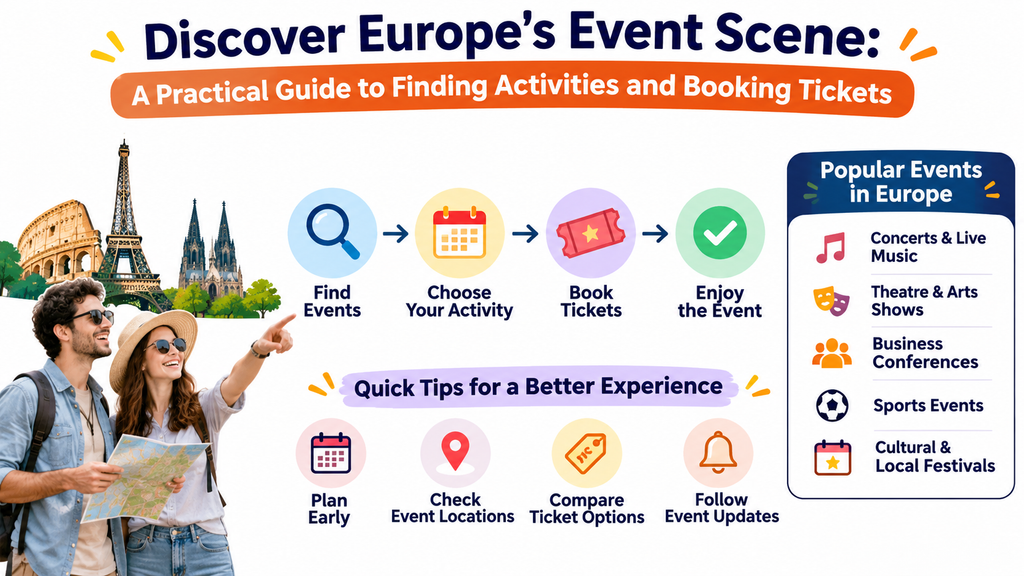
This guide explains how to find suitable events and plan bookings. It also covers practical ways to promote events and manage registrations.
1. Understand the European Event Landscape
Europe has a diverse event culture. Every destination offers different activities, audiences, and local experiences.
Large cities often host concerts, business conferences, and major festivals. Smaller communities may organize local markets, workshops, and cultural celebrations.
Here are some popular event categories:
| Event Category | Common Activities |
|---|---|
| Music | Concerts, live bands, DJ shows, and music festivals |
| Arts and culture | Exhibitions, creative shows, and cultural celebrations |
| Business | Conferences, networking meetings, and trade events |
| Technology | Startup gatherings, software talks, and innovation events |
| Education | Workshops, seminars, and training sessions |
| Food | Food festivals, tasting events, and cooking activities |
| Community | Local fairs, social gatherings, and public events |
| Entertainment | Theatre, comedy, dance, and live performances |
Each category offers a different experience. Choose activities that match your interests and available time.
Think About Your Event Goals
Your reason for attending can guide your search.
- Travelers may want to experience local culture.
- Music fans may look for concerts and festivals.
- Students may prefer workshops and educational sessions.
- Business owners may attend professional conferences.
- Local residents may explore community activities.
Once you know what you want, search by destination and date. This makes your event search more focused.
2. Find Upcoming Events in Europe With a Clear Search Plan
Searching for Upcoming Events in Europe can help you explore activities across different destinations.
You may find a music festival, professional meeting, or local celebration. The challenge is choosing an event that fits your plans.
Use this simple process:
- Choose your preferred destination.
- Select an event category.
- Check events that match your dates.
- Compare venue locations.
- Review ticket prices and categories.
- Read event descriptions.
- Check entry rules and conditions.
- Save the details of suitable events.
What Makes an Event Listing Useful?
A useful listing should explain the event clearly. It should help visitors understand what they can expect.
| Event Detail | What Visitors Should Check |
|---|---|
| Event name | Does it explain the activity? |
| Description | Does it cover the main purpose? |
| Date | Does it fit your schedule? |
| Time | Can you reach the venue on time? |
| Venue | Is the location suitable? |
| Ticket options | Which categories can you choose? |
| Price | Does the cost fit your budget? |
| Language | Can you understand the event? |
| Entry rules | Do you meet the requirements? |
| Organizer conditions | Do you understand the booking terms? |
Never book based only on an event title. Read the full details and check the latest information.
3. Discover What Is Happening in Berlin
Berlin attracts people who enjoy music, technology, art, and entertainment. Its event scene offers options for tourists and local residents.
People searching for Events in Berlin can explore several categories.
Music and Live Performances
Music fans can search for live bands, electronic music, DJ shows, and concerts.
Before choosing a ticket, check the performer and venue. Review the start time and entry conditions.
Technology and Startup Events
Berlin attracts technology professionals, founders, and students. Some events focus on software, startups, digital products, and business innovation.
You may find expert talks, workshops, or networking activities. Review the event agenda to understand its main focus.
Art and Creative Activities
Art exhibitions and creative workshops offer different ways to explore Berlin. Visitors can look for activities related to design, photography, and local culture.
Evening Entertainment
Comedy, dance, and live shows can add variety to a city visit. Check transport options before choosing an evening event.
Example: A traveler plans a weekend in Berlin. They choose a concert for Friday evening. On Saturday, they attend a technology meetup. On Sunday, they visit a creative event.
This schedule gives them a mix of entertainment and learning.
4. Explore Paris Through Cultural and Professional Events
Paris attracts visitors who enjoy art, music, learning, and business activities.
People searching for Events in Paris can explore several event types.
Cultural Festivals and Exhibitions
Paris offers many cultural experiences. Visitors can search for exhibitions, film events, art activities, and local celebrations.
Check the event description for language details. Some activities may use French, while others may offer multilingual information.
Business Meetings and Seminars
Business visitors can explore conferences related to marketing, finance, technology, design, and entrepreneurship.
Read the agenda before booking. Choose events that match your professional interests.
Music and Entertainment
Live music, theatre, comedy, and dance events offer different evening experiences.
Check the venue and schedule before choosing an activity. Make sure the event fits your travel plans.
Learning and Creative Workshops
Visitors can explore workshops related to cooking, photography, art, and design.
These activities can help people learn something new during their trip.
Example: A visitor spends a few days in Paris. They attend a creative workshop in the morning. Later, they explore an exhibition and choose a music event for the evening.
5. Plan a Music Experience With the Right Concert Ticket
Live music offers a shared experience for people from different cultures. European cities host performances across many music styles.
Searching for Concert Tickets Europe can help fans explore different shows.
Popular Concert Categories
| Music Category | Possible Experience |
|---|---|
| Pop | Popular artists and live music shows |
| Rock | Bands and energetic performances |
| Classical | Orchestra and formal music events |
| Jazz | Live jazz sessions and smaller performances |
| Electronic | DJ shows and electronic music events |
| Folk | Traditional music and regional performances |
| Indie | Independent artists and smaller concerts |
Compare Ticket Details Carefully
Before choosing a concert, review these details:
- Artist or performer.
- Concert date and time.
- Venue name and location.
- Ticket categories.
- Displayed ticket prices.
- Age limits.
- Entry requirements.
- Organizer instructions.
Ticket categories may offer different entry options. Read each description before making your choice.
Prepare for Concert Day
Check the venue location before leaving. Plan your transport and arrival time.
Save your booking confirmation in an easy-to-find place. Follow the organizer’s instructions when you reach the venue.
6. Find Business Conferences That Match Your Career
Professional events help people share knowledge and discuss industry changes. They also offer opportunities to meet people from similar fields.
People searching for Business Conferences in Europe can explore many industries.
Common Conference Topics
- Business strategy and leadership.
- Technology and software development.
- Artificial intelligence and data.
- Digital marketing and online growth.
- Entrepreneurship and startups.
- Finance and investment.
- Product development and innovation.
- Education and professional training.
How to Choose a Suitable Conference
Start with your professional goal. Decide whether you want to learn a skill, understand a trend, or meet industry contacts.
Next, review the agenda and speaker information. Check the event audience and session topics.
Also compare the venue, date, ticket category, and schedule. These details can help you decide whether the conference suits your plans.
Prepare Before You Attend
- Read the conference schedule.
- Choose sessions that match your interests.
- Prepare a short introduction.
- Write down questions for speakers.
- Review the venue location.
- Save your registration details.
- Leave time for networking.
Example: A startup owner visits Europe for a business conference. They attend sessions about digital products and business growth. They also meet other founders and exchange ideas.
7. How an Event Ticketing Platform Supports Online Bookings
An Event Ticketing Platform Europe gives organizers a place to present event details and ticket options online.
It also helps attendees explore event information before booking. Each platform may offer different features.
A Typical Ticket Booking Process
- The organizer creates an event listing.
- The listing explains the event.
- The organizer adds the date and venue.
- The organizer provides ticket categories.
- Visitors review the event details.
- Visitors choose a suitable ticket option.
- The booking process records the selection.
- Attendees follow the event entry instructions.
Benefits for Event Attendees
An online ticketing platform can help visitors:
- Explore events across different cities.
- Compare dates and venues.
- Review ticket categories.
- Check displayed prices.
- Read event descriptions.
- Find booking instructions.
Benefits for Event Organizers
Organizers can present event details through an online listing. They can share schedules, ticket categories, and important instructions.
Clear information helps visitors understand an event. It also helps them decide whether the activity matches their interests.
8. Improve Attendee Sign-Ups With Event Registration Tools
Not every event needs paid tickets. Some organizers run free workshops, seminars, training sessions, and community activities.
An Event Registration Platform Europe helps organizers collect and manage attendee sign-ups.
What Registration May Include
Depending on the platform, organizers may manage:
- Attendee names.
- Contact details.
- Registration categories.
- Selected sessions.
- Participant records.
- Booking details.
- Event updates.
Organizers should collect only relevant information. They should also explain why they need each detail.
Keep Registration Instructions Simple
Visitors should understand every step. Use clear labels and short instructions.
Check the date, time, and venue before publishing the registration details. Make sure the information matches the event plan.
If something changes, tell registered attendees. Clear communication helps people prepare.
9. Build an Event Listing That Attracts the Right Audience
Event organizers need to explain their activities clearly. Online listings can help interested people discover suitable events.
The phrase List Your Event Online describes this important activity.
A useful listing should answer common visitor questions. It should also explain what the event offers.
Step 1: Choose a Clear Event Title
Write a title that explains the activity. Avoid vague wording that creates confusion.
Step 2: Describe the Main Experience
Explain the event purpose and activities. Mention who may enjoy the event.
Step 3: Add Accurate Dates and Times
Check the event schedule before publishing. Include the correct starting time.
Step 4: Provide Venue Details
Share the venue name and location. Add access information when available.
Step 5: Explain Ticket Categories
List the available ticket options. Describe what each category includes.
Step 6: Share Registration Instructions
Explain how visitors can register or book. Keep the process easy to understand.
Step 7: Review Every Detail
Check spelling, dates, prices, and venue information. Correct errors before publishing.
Event Listing Checklist
| Listing Detail | What to Include |
|---|---|
| Event title | Clear and accurate name |
| Description | Purpose and activities |
| Category | Correct event type |
| Date | Confirmed event date |
| Time | Accurate starting details |
| Venue | Name and location |
| Ticket options | Available categories |
| Price | Clear price information |
| Registration | Simple booking instructions |
| Entry rules | Important conditions |
| Contact details | Suitable contact method |
A complete listing helps visitors understand the event. It also gives organizers a clear way to present their activities.
10. Manage Ticket Sales With Clear Categories and Prices
Organizers who want to Sell Event Tickets Online need a clear plan.
They should decide which ticket categories suit their event. They should also explain prices and entry conditions.
Create Suitable Ticket Options
Different visitors may need different entry choices. Organizers can create categories that match their event.
Examples include:
- General admission.
- Standard seating.
- Premium seating.
- Student entry.
- Group entry.
- Workshop access.
Only include categories that the event supports. Explain the difference between each option.
Explain Ticket Prices
Show the price for each category. Explain additional charges when they apply.
Use clear names and descriptions. Visitors should understand the cost before booking.
Review Booking Records
Organizers should check the booking information available through their platform. This can help them prepare for expected attendance.
The exact management features depend on the service. Organizers should understand what their chosen platform supports.
Keep Attendees Informed
Share important changes about schedules, locations, or entry rules. Use the available communication methods.
Do not assume every attendee knows about a change. Provide clear and timely information.
11. Eight Common Event Booking Mistakes
Careful planning can help visitors avoid many booking problems.
Mistake 1: Booking Without Checking the Date
An event may conflict with your travel or work schedule.
Solution: Compare the event date with your calendar. Check the day and time before booking.
Mistake 2: Overlooking the Venue
A venue may sit far from your hotel or planned route.
Solution: Review the full address. Check transport options and travel time.
Mistake 3: Choosing the Wrong Ticket Category
Different categories may offer different entry choices.
Solution: Read the ticket description carefully. Choose the option that matches your needs.
Mistake 4: Ignoring Entry Requirements
Some events set age limits or special conditions.
Solution: Read the entry rules before booking. Contact the organizer if anything seems unclear.
Mistake 5: Waiting Too Long to Search
Some events may have limited ticket availability.
Solution: Explore suitable events early. Check current availability before planning your trip around an event.
Mistake 6: Forgetting the Start Time
Visitors may remember the date but miss the starting time.
Solution: Save the event time in your calendar. Plan your journey before event day.
Mistake 7: Skipping Organizer Conditions
Each organizer may set different cancellation or change rules.
Solution: Read the event terms before booking. Keep the relevant information for reference.
Mistake 8: Losing Booking Details
You may need your confirmation when you arrive at the venue.
Solution: Save your booking details in an easy-to-find place. Follow the organizer’s entry instructions.
12. How MyEventsNow EU Brings Event Discovery and Management Together
MyEventsNow EU focuses on event discovery, online ticket booking, and event management across Europe.
It connects attendees, organizers, venues, and businesses through an online marketplace.
For People Searching for Events
Attendees can explore different event categories and destinations. These may include concerts, festivals, workshops, conferences, and entertainment activities.
A visitor can look for activities during a city break. A local resident can explore events that match personal interests.
For People Organizing Events
Organizers need a clear way to present their activities. MyEventsNow EU provides a marketplace focused on event discovery and management.
Organizers can prepare event listings and share important information. They can also work with ticket and registration details through the platform’s available features.
For Different Event Communities
Many groups arrange public events. These can include:
- Event agencies.
- Venues.
- Businesses.
- Training providers.
- Community organizations.
- Music and entertainment groups.
- Local activity organizers.
Each group has different needs. Clear event information helps attendees understand what each activity offers.
For a Connected European Event Marketplace
One visitor may search for concerts. Another may want a business conference or creative workshop.
A shared marketplace can help people explore different event categories. Visitors should always review the details and conditions for each event.
13. Four Practical Examples of Event Planning
The following fictional examples show how different people can use event discovery.
Example 1: A Family Planning a City Weekend
A family plans a short trip to Berlin. They want activities that suit different interests.
They search for cultural events and live performances. They compare event dates, locations, and ticket categories.
They choose an activity that fits their schedule. They also check the venue and entry rules.
Example 2: A Marketing Professional Visiting Paris
A marketing professional travels to Paris for work. They want to attend a conference about digital marketing.
They review the event agenda and session topics. They choose a conference that matches their professional goals.
They prepare questions and save their registration details. They also plan time for networking.
Example 3: A Student Looking for a Learning Activity
A student visits a European city during a holiday. They want to join a creative workshop.
They compare photography, cooking, and design activities. They check the language, schedule, and venue.
They choose a workshop that fits their interests. They also review the registration conditions.
Example 4: A Local Organizer Promoting a Festival
A local team plans a small cultural festival. The organizers want more people to discover it.
They prepare the event description, schedule, venue, and ticket details. They also explain registration and entry instructions.
They review the listing before publishing. They prepare to share updates if plans change.
14. Attendee Checklist for a Better Booking Experience
Before confirming a ticket, review the following details.
| Checkpoint | What to Review |
|---|---|
| Event name | Confirm the correct activity |
| Event type | Match your interests |
| Date | Check your schedule |
| Time | Confirm the start time |
| Venue | Review the full address |
| Ticket category | Select the right option |
| Price | Check the displayed cost |
| Entry rules | Review age and access conditions |
| Cancellation terms | Read the organizer’s policy |
| Confirmation | Save your booking details |
This quick check can help you make a better booking decision.
15. Organizer Checklist for Event Preparation
Organizers should review their information before publishing an event.
| Task | Details to Prepare |
|---|---|
| Event title | Clear and accurate name |
| Event description | Purpose and activities |
| Event category | Suitable event type |
| Date and time | Confirmed schedule |
| Venue | Correct location |
| Ticket setup | Available categories |
| Ticket prices | Clear cost details |
| Registration | Sign-up instructions |
| Attendee information | Relevant details |
| Entry rules | Participation conditions |
| Event updates | Communication plan |
| Booking records | Available registration details |
| Final review | Check the complete listing |
A careful review helps organizers share accurate information. It also helps visitors understand the event before booking.
16. Make Every Event Visit Easier With Simple Planning
A good event experience starts before you reach the venue. A few practical steps can make your visit easier.
Look Beyond Major Attractions
Explore local workshops, community fairs, and smaller performances. These activities may offer a different view of a destination.
Compare Different Activities
Review several options before choosing. Compare event dates, venues, prices, and categories.
Check the Event Language
Some events use the local language. Others may offer English details or multilingual support.
Review this information before booking. It matters when you attend workshops or professional sessions.
Plan Your Route
Check the venue location before event day. Review transport options and allow enough time for arrival.
Keep Your Booking Details Ready
Save your confirmation and entry instructions. Check whether the organizer needs a digital ticket or another form of proof.
Read Updates Before Leaving
Review the latest event information. Organizers may share changes to the schedule, venue, or entry process.
Frequently Asked Questions
1. What is online event ticket booking in Europe?
Online event ticket booking helps visitors explore events and choose available ticket options through digital platforms. People can review dates, venues, prices, and entry conditions before booking. Each platform may use a different process. Always read the event details and organizer terms before confirming your ticket.
2. How can I discover upcoming events in Europe?
Choose a country or city first. Then explore categories such as concerts, festivals, business events, and workshops. Compare dates, venues, and ticket details. MyEventsNow EU focuses on event discovery across Europe and connects people with event organizers and venues.
3. What types of events can I find in Berlin?
Berlin offers concerts, technology gatherings, art activities, workshops, and entertainment shows. Visitors can also explore professional meetups and cultural events. Choose activities that fit your interests and travel dates. Review the venue, schedule, ticket options, and entry rules before booking.
4. Which activities can visitors explore in Paris?
Paris offers art exhibitions, cultural festivals, live music, business conferences, and creative workshops. Visitors can select events based on their interests and available time. Check the event language and venue details. Read the full schedule before making a booking.
5. How do I choose concert tickets in Europe?
Start by checking the artist, music style, and concert date. Compare ticket categories, displayed prices, and venue details. Review age limits and entry conditions. Plan your transport before event day. Save your booking confirmation so you can find it easily.
6. Why should I attend a business conference in Europe?
A business conference can help you explore industry topics and meet professionals. Many events cover technology, finance, marketing, entrepreneurship, and innovation. Check the agenda and speaker details before booking. Choose sessions that match your goals and prepare questions for the event.
7. What is an event ticketing platform?
An event ticketing platform helps organizers present events and ticket options online. Attendees can explore event information and follow the available booking process. Organizers can share schedules, prices, and ticket categories. Each platform offers different features, so review its services before choosing one.
8. How does an event registration platform help organizers?
An event registration platform helps organizers collect and manage attendee sign-ups. It can support conferences, workshops, seminars, and training sessions. Depending on its features, it may also help organizers review participant information and registration records. Clear instructions can make the sign-up process easier.
9. What details should an online event listing include?
An event listing should include a clear title, description, date, time, and venue. It should also explain ticket options, prices, and registration steps when relevant. Organizers should share important entry rules. Accurate details help visitors understand the activity before booking.
10. Can event organizers sell tickets online?
Yes. Organizers can use online ticketing services that match their event needs. They should explain ticket categories, prices, and booking conditions. They should also review available booking records and share important updates. Payment and ticket features depend on the selected platform.
11. What should I check before booking an event?
Review the event date, starting time, venue, ticket category, and price. Check age limits, entry conditions, and cancellation terms. Make sure the event fits your travel schedule. Save your confirmation after booking and follow the organizer’s instructions.
12. How does MyEventsNow EU support event organizers and attendees?
MyEventsNow EU focuses on event discovery, online ticket booking, and event management across Europe. It connects organizers, venues, businesses, and attendees through a marketplace. Visitors can explore event categories, while organizers can present event information. Specific ticket options and conditions vary by event.
Conclusion
Europe offers events for music fans, travelers, students, and professionals. Concerts, festivals, workshops, and conferences can add new experiences to any trip. Start with your interests and compare the event details carefully. Check dates, venues, prices, and entry conditions before booking. Organizers should also prepare clear listings and useful registration information. MyEventsNow EU connects event discovery with event management through one marketplace. Explore activities across Europe and choose events that match your plans. Careful preparation can help every visitor enjoy a smoother event experience.
