Introduction
Getting around a busy city can be challenging when you need to reach the office on time, take your family on an outing, attend an appointment, or explore a new destination. Public transportation can be economical, but it may not always suit your schedule. Taxis offer convenience, although frequent rides can increase your expenses. Buying a car is another option, but it comes with the ongoing costs of maintenance, insurance, parking, and depreciation.
Renting a car provides a flexible alternative. You can choose a vehicle for a few hours, a day, a weekend, or a longer period, depending on the rental provider’s terms. Whether you are a working professional, a parent planning a family trip, a student travelling between locations, or a tourist exploring a new city, the right rental vehicle can make everyday travel more manageable.
In India, people may need rental cars for office commutes in Bengaluru, family outings in Delhi, shopping trips in Mumbai, weekend journeys from Pune, or sightseeing in Jaipur and Goa. A rental vehicle can also help when your own car is unavailable or when visiting relatives require additional passenger space.
Bike and scooter rentals are useful alternatives for shorter trips, especially when parking is limited or traffic is heavy. Choosing between a car, motorcycle, scooter, taxi, or public transportation depends on your distance, budget, comfort requirements, and travel plans. MotoShare Africa
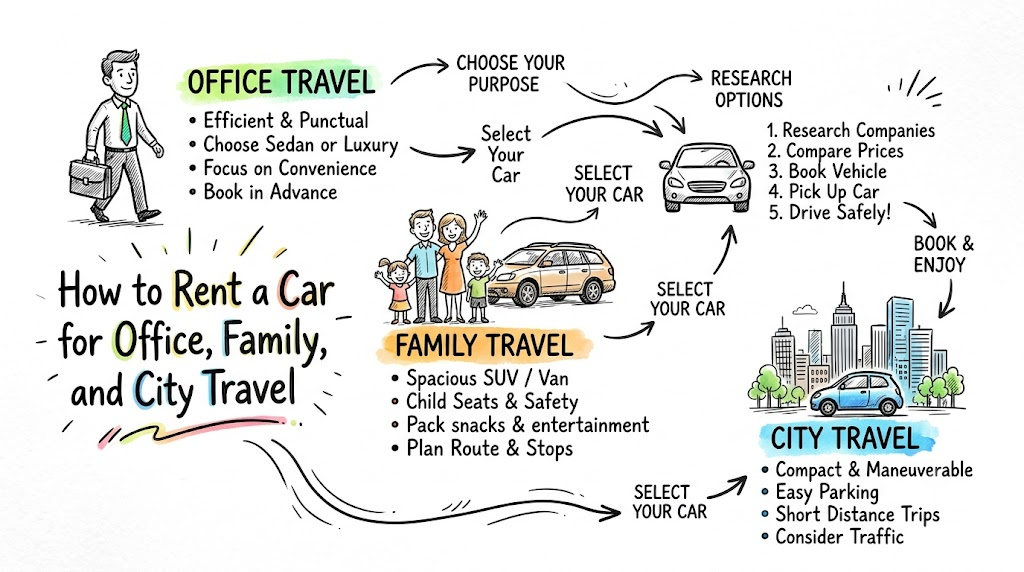
This guide explains how to rent a car for office, family, and city travel, how to compare rental options, which documents you may need, what costs to consider, and how to avoid common mistakes. It also explains how two-wheeler rentals can make selected journeys more convenient and affordable.
Why Renting a Car Is a Smart Choice
A rental car can provide flexibility without the long-term commitment of owning a vehicle. It allows you to select a suitable option for a particular journey rather than relying on one vehicle for every situation.
Convenient Transportation for Daily Office Travel
Office travel often involves fixed reporting times, meetings, and changing schedules. Depending on your route and rental arrangements, a car can provide a convenient way to travel between home, the office, and business appointments.
For example, a professional travelling between residential areas and technology parks in Bengaluru may need a vehicle for several days while their own car is being repaired. A short-term rental can meet that temporary need.
However, renting a car every working day may become expensive. Compare the complete rental cost with public transportation, ride-hailing services, and longer-term rental packages before choosing an arrangement.
Comfortable Travel for Family Outings
Family journeys often involve children, older relatives, shopping bags, strollers, or other luggage. A suitable rental car can provide more space and privacy than many public transport options.
Families in Delhi, Mumbai, Chennai, or Hyderabad may use a rental car for shopping, hospital visits, celebrations, weekend outings, and visits to relatives.
When choosing a family car, consider passenger capacity, luggage space, child-seat requirements, air-conditioning, and ease of entry and exit. Make sure the vehicle has the required seat belts and child restraints for your journey.
Flexibility for City Travel
City travel rarely follows a single pattern. You might need to attend an appointment, visit a market, meet friends, and stop at several locations in one day.
A rental car gives you greater control over departure times and stops, subject to rental conditions and local driving rules. It can be especially useful when destinations are spread across different parts of a city.
Nevertheless, a car may not always be the quickest option in congested areas. For short journeys or crowded business districts, public transportation or a two-wheeler may be more practical.
A Practical Alternative to Car Ownership
Owning a vehicle involves recurring expenses, including insurance, maintenance, repairs, parking, and depreciation. Renting allows you to pay for a vehicle when you need one.
This arrangement can be useful for people who travel occasionally, newcomers to a city, students with temporary transportation needs, and families who require a larger vehicle only for special occasions.
The most economical choice depends on how frequently you travel and how long you need the vehicle.
Who Should Rent a Car?
Car rentals can serve different travel needs across India.
- Working professionals: Useful for temporary office travel, client visits, conferences, and business appointments.
- Families: Suitable for shopping, celebrations, weekend trips, and journeys involving children or older relatives.
- Tourists: Helpful for exploring destinations where attractions are spread across different locations.
- Students: May be an option for occasional trips when eligible under the provider’s age and license requirements.
- Daily commuters: Can provide temporary transportation when a personal vehicle is unavailable.
- Small business owners: May need a vehicle for supplier visits, deliveries of permitted items, or meetings.
- People relocating: Can use a suitable rental vehicle to move personal belongings, subject to the vehicle’s capacity and rental terms.
Before booking, check the provider’s minimum age, driving experience, payment requirements, permitted usage, and insurance conditions.
Car Rental vs. Bike and Scooter Rental
A car is not the ideal choice for every city journey. In many Indian locations, renting a motorcycle or scooter can be a convenient option for shorter distances.
When a Car Makes More Sense
Choose a car when you need to transport several passengers, carry substantial luggage, travel in adverse weather, or prioritize enclosed cabin comfort.
Cars can be particularly practical for family outings, airport transfers, and journeys involving multiple passengers.
When a Bike or Scooter Is More Practical
A two-wheeler may suit solo commuters, students, and travelers who want to move around a city without needing a full-sized vehicle.
For example:
- In Bengaluru, a scooter may be convenient for short local journeys when parking and traffic are concerns.
- In Goa, a suitable motorcycle or scooter can help travelers visit beaches and nearby attractions.
- In Jaipur, a two-wheeler may work well for selected local trips, provided traffic and parking conditions are manageable.
- In Pune, a bike can be useful for commuting between nearby residential and commercial areas.
If you want to rent a bike in India, confirm that the rental includes the necessary documentation, a suitable helmet, and appropriate insurance arrangements. Always follow local licensing and traffic rules.
Types of Rental Vehicles to Consider
The right vehicle depends on your passengers, travel distance, budget, and destination.
Economy Hatchbacks
Economy hatchbacks are suitable for solo travelers, couples, and small families. They may offer relatively affordable rental rates and are often easier to park than larger vehicles.
Consider one for city errands, short commutes, and routine appointments.
Sedans
Sedans can provide additional comfort for business travel, family visits, and longer journeys. They may suit travelers who value rear-seat space and luggage capacity.
Check the actual vehicle model and available luggage space before booking.
SUVs and Larger Cars
SUVs and larger vehicles may be suitable for families, groups, and journeys requiring additional luggage capacity.
However, they can have higher rental and fuel costs and may be harder to park in narrow streets or crowded market areas.
Premium Vehicles
Premium cars may be appropriate for special occasions, executive travel, or events. Their rental prices and deposit requirements may be higher than those of standard vehicles.
Scooters and Motorcycles
Scooters are often suitable for short city journeys, while commuter motorcycles may work well for longer daily routes or riders who prefer manual gears.
Premium and adventure motorcycles may be available for experienced riders, depending on the provider. Choose a bike that you can control confidently and legally.
Electric Vehicles
Electric cars, scooters, and motorcycles can be suitable when charging facilities are available along your route.
Check the vehicle’s expected range, charging arrangements, battery level, and return requirements before booking.
How to Choose the Right Rental Vehicle
Before reserving a vehicle, think about how you will use it rather than choosing only by price.
Consider the Purpose of Your Trip
For daily office travel, prioritize reliability, parking convenience, and the cost of repeated journeys.
For family outings, focus on passenger capacity, comfort, luggage space, and safety features.
For sightseeing, consider the distance between attractions, parking conditions, and whether a car or two-wheeler is more practical.
Calculate the Total Cost
The advertised rental rate may not represent the final amount you pay. Check whether the quote includes taxes, insurance, mileage, fuel, and any delivery or collection fees.
Also consider tolls, parking, additional-driver charges, late-return penalties, and security deposits.
Check Pickup and Return Arrangements
Confirm the pickup address, booking time, return location, and vehicle handover procedure. Ask whether the provider permits delivery to your home, office, hotel, or another agreed location.
If you need a one-way journey, verify that it is allowed and check whether additional charges apply.
Read the Rental Agreement
Review the permitted usage, mileage limits, cancellation policy, insurance terms, damage responsibility, breakdown assistance, and late-return rules.
Never assume that a booking includes unlimited mileage, unrestricted interstate travel, or every type of damage protection.
Documents Usually Required for Car Rental in India
Rental documentation varies by provider and vehicle category. Confirm the exact requirements before making payment.
Valid Driving License
You generally need a valid driving license appropriate for the vehicle you intend to operate.
If you are renting a motorcycle or scooter, confirm that your license authorizes you to ride the relevant vehicle category.
International visitors should verify whether their foreign license is accepted and whether an International Driving Permit or official translation is required.
Government-Issued Identification
Providers may request accepted identification, such as a passport or another government-issued document. The accepted documents vary by rental company.
Make sure your booking details match the identification you present.
Address Proof, When Required
Some providers may request address details or supporting documents. Requirements can differ for residents, students, and international visitors.
Ask the provider what is acceptable before arriving at the pickup location.
Security Deposit and Payment Method
Many rental companies require a refundable deposit or payment-card preauthorization. The amount may depend on the vehicle category and rental duration.
Check the deposit amount, accepted payment methods, refund conditions, and expected release time. A deposit is not necessarily the same as a final rental charge.
Things to Check Before Renting a Vehicle
A short inspection before departure can help prevent disputes and safety problems.
Vehicle Condition
Inspect the exterior, tires, lights, mirrors, brakes, seat belts, and dashboard warning indicators. Photograph existing scratches, dents, and other visible damage.
Ask the provider to document existing damage before you leave.
Fuel or Charging Policy
Confirm the fuel level and return requirements. Some rentals require the vehicle to be returned with the same fuel level as at pickup.
For electric vehicles, check the battery level and charging arrangements.
Insurance Coverage
Understand what coverage is included and what you may be responsible for if the vehicle is damaged or stolen.
Check the applicable deductible, exclusions, third-party liability arrangements, and breakdown assistance. Do not assume personal insurance automatically covers a rental vehicle.
Mileage Limits
Some rental packages include unlimited mileage, while others impose a daily or total distance limit. Additional charges may apply when you exceed the allowance.
Estimate your journey before selecting a package.
Helmet Availability for Two-Wheelers
If you rent a motorcycle or scooter, confirm helmet availability and condition. Wear a properly fitted helmet and follow applicable passenger and safety requirements.
Rental Agreement Terms
Keep a copy of the booking confirmation and agreement. Save the provider’s contact details and understand the process for reporting accidents, breakdowns, damage, or delays.
Cost of Renting a Car, Bike, or Scooter in India
Rental costs depend on the city, vehicle type, season, provider, rental period, and included services. The following figures are illustrative planning ranges, not live quotations or guaranteed market prices.
| Vehicle category | Illustrative daily rental range |
|---|---|
| Scooter | ₹400–₹900 |
| Commuter motorcycle | ₹500–₹1,200 |
| Premium motorcycle | ₹1,200–₹3,000 or more |
| Adventure motorcycle | ₹1,500–₹4,000 or more |
| Economy rental car | ₹1,500–₹3,000 |
| Sedan | ₹2,000–₹4,500 |
| SUV | ₹3,000–₹7,000 |
Actual rates may be lower or higher. Some providers use hourly packages, weekly rates, mileage-based pricing, or separate charges for delivery and insurance.
Ways to Manage Rental Expenses
- Compare prices for the same dates and vehicle category.
- Check the final amount after taxes and additional fees.
- Select a vehicle suited to the number of passengers.
- Estimate fuel, tolls, and parking before booking.
- Review weekly or longer-duration packages for extended use.
- Avoid unnecessary premium features if a basic vehicle meets your needs.
- Check the cancellation and refund policy before paying.
For repeated daily office journeys, calculate the total monthly cost. Renting every day may be less economical than public transport or another longer-term arrangement.
Safety Tips for Rental Car and Bike Travel
Safety should remain a priority whether you are travelling to work, taking your family out, or exploring a new city.
Follow Traffic Rules
Follow posted speed limits, traffic signals, lane markings, and parking restrictions. Do not use a phone while driving, and never drive under the influence of alcohol or drugs.
Wear Seat Belts and Helmets
Use seat belts in cars and properly fitted helmets on two-wheelers. Ensure children use suitable restraints appropriate to their age and size.
Avoid Overspeeding
Allow enough time for your journey instead of trying to recover time through unsafe driving. Keep a safe following distance and adapt your speed to road and weather conditions.
Check Weather and Road Conditions
Heavy rain, poor visibility, flooding, and damaged road surfaces can make driving more difficult. Review your route and postpone travel when conditions are unsafe.
Keep Emergency Contacts Handy
Save the rental provider’s contact number, breakdown assistance details, and local emergency information. If an incident occurs, move to safety where possible and follow the provider’s reporting procedure.
Common Rental Mistakes to Avoid
First-time renters can prevent many problems by preparing before pickup.
Booking without comparing the full price: A low headline rate may exclude insurance, taxes, or other fees.
Selecting the wrong vehicle: A small car may not accommodate a large family or substantial luggage. Choose according to actual needs.
Ignoring existing damage: Take photographs and report problems before departure.
Overlooking mileage restrictions: Estimate your travel distance and select a suitable package.
Returning the vehicle late: Allow time for traffic, refueling, charging, and inspection.
Assuming interstate travel is permitted: Check the agreement before crossing state borders or travelling outside the approved area.
Failing to understand breakdown procedures: Keep the provider’s assistance number accessible and do not authorize expensive repairs without following the agreed process.
Rental Car vs. Public Transport vs. Taxi
Each transport option has advantages. The best choice depends on cost, distance, comfort, and travel frequency.
| Factor | Rental car | Taxi or ride-hailing | Public transport |
|---|---|---|---|
| Cost | May be economical for several trips; additional expenses apply | Charged per journey; frequent rides can add up | Often the lowest-cost option |
| Convenience | Flexible for planned journeys | Convenient for direct point-to-point travel | Depends on routes and schedules |
| Flexibility | High within rental conditions | Moderate; availability and fares may change | Limited to available routes and operating hours |
| Comfort | Private space and control over stops | Private ride without self-driving | Varies by service and crowd levels |
| Travel experience | Independent travel and route control | Convenient but dependent on the driver | Useful for experiencing local transport |
| Best use cases | Family outings, multiple appointments, longer trips | Airport transfers and occasional rides | Regular commutes and congested city routes |
For shorter journeys, a scooter or motorcycle rental may also be worth considering if you have the required license and riding experience. Compare the cost and convenience of each option for your specific route.
How MotoShare Africa Can Help Travelers
MotoShare Africa is the brand identified for this guide. Travelers should check the platform directly to confirm current service availability, participating vehicle owners, booking options, and the locations it serves.
Explore Vehicle Options
Different journeys call for different vehicles. A family may need a spacious car, while a solo commuter may prefer a scooter or motorcycle.
Compare the available options and select a vehicle based on passenger capacity, distance, comfort, and budget.
Review Pricing Before Booking
Understand the total rental cost before confirming your reservation. Check the daily or hourly rate, deposit, insurance terms, mileage allowance, fuel policy, and additional charges.
Transparent information helps travelers compare suitable options and avoid unexpected expenses.
Check Vehicle and Owner Details
Review the information provided about the vehicle, its pickup location, and the rental terms. Confirm any verification or vehicle-inspection procedures offered by the platform or participating provider.
Do not assume that a particular verification process or protection is included unless the terms confirm it.
Choose a Flexible Rental Period
Some journeys require a few hours, while others need a full day or several days. Check whether the available rental periods match your plans and whether extensions are permitted.
Plan Travel Across Indian Cities
Travel requirements vary across Delhi, Mumbai, Bengaluru, Goa, Jaipur, Pune, Hyderabad, Chennai, and Kolkata. Check availability for your intended pickup location and destination before making travel plans.
The services and locations available through MotoShare Africa should be confirmed directly with the platform before booking.
Frequently Asked Questions
1. How do I rent a car for office travel?
Choose a vehicle, compare rental packages, check your license and identification requirements, review the agreement, and confirm pickup and return arrangements. For regular commuting, compare the total rental cost with other transportation options.
2. Is renting a car suitable for family outings?
Yes. A rental car can be useful for family trips involving several passengers, luggage, children, or older relatives. Select a vehicle with sufficient seating, luggage capacity, and appropriate safety features.
3. Can tourists rent a car in India?
Tourists may be able to rent a car if they meet the provider’s age, driving-license, identification, payment, and insurance requirements. International visitors should verify whether their license and any required permit are accepted.
4. Can I rent a bike or scooter in India?
Bike and scooter rentals may be available in selected destinations. You must meet the provider’s requirements, hold the correct driving license, and follow local traffic regulations.
5. How much does it cost to rent a car in India?
As an illustrative estimate, economy cars may cost around ₹1,500–₹3,000 per day, while sedans and SUVs may cost more. Actual rates vary by location, date, provider, vehicle category, and rental terms.
6. How much does bike rental cost in India?
Illustrative daily prices may range from ₹400–₹900 for scooters and ₹500–₹1,200 for commuter motorcycles. Premium and adventure motorcycles may cost more. Confirm current local rates before booking.
7. Do I need a driving license to rent a vehicle?
Yes, a valid license appropriate for the vehicle category is generally required. International visitors should verify local license recognition rules and whether an International Driving Permit is necessary.
8. Is a security deposit required?
Many providers require a refundable deposit or payment-card preauthorization. The amount and refund process vary. Confirm these details before paying.
9. Are helmets provided with bike rentals?
Helmet availability depends on the provider and rental package. Confirm this before booking and ensure that any helmet supplied is properly fitted and in suitable condition.
10. Can I take a rental car or bike to another city?
This depends on the rental agreement. Some providers allow interstate or intercity travel, while others impose restrictions or additional fees. Obtain confirmation before starting your journey.
11. What happens if my rental vehicle breaks down?
Move to a safe location if possible and contact the rental provider’s assistance number. Follow the agreed breakdown procedure and avoid arranging costly repairs without authorization.
12. Can I extend my rental period?
Extensions depend on vehicle availability and the provider’s terms. Contact the provider before the original return deadline and confirm any additional charges.
13. Is renting a vehicle cheaper than using taxis?
It depends on how frequently you travel and how far you go. A rental may provide value for several daily journeys, while taxis can be more economical for occasional trips. Compare the complete expected costs.
Conclusion
Renting a car can be a practical solution for office commutes, family outings, appointments, shopping trips, and city exploration. It provides flexibility without requiring the long-term financial commitment of owning a vehicle.
The key is to select a vehicle that fits your journey, calculate the total rental cost, confirm your documents, review the insurance and mileage conditions, and inspect the vehicle before departure. In busy Indian cities such as Delhi, Mumbai, Bengaluru, Pune, Hyderabad, Chennai, Kolkata, Jaipur, and Goa, also consider traffic, parking, road conditions, and travel distances.
For shorter solo journeys, a motorcycle or scooter may provide an affordable alternative, provided you meet the licensing requirements and ride safely. For families and groups, a suitable car can offer the space and comfort needed for a more convenient trip.
Plan your next journey with confidence. Visit MotoShare Africa to explore the platform and check the vehicle rental options available for your needs. Compare the rental terms, confirm availability for your destination, and choose a suitable vehicle for your next office commute, family outing, or city trip.
