Introduction
Planning a trip across Africa can be exciting. You may want to explore busy cities, quiet beaches, mountain roads, or beautiful countryside destinations. Having your own rental car can make these journeys easier.
A rental car gives you more control over your travel plans. You can choose when to leave, where to stop, and how long to stay. It can also help families, business travelers, tourists, and backpackers travel more comfortably.
However, renting a car involves more than choosing a vehicle and paying the rental fee. You need to understand the rental agreement, insurance coverage, deposit rules, fuel policy, and driving conditions.
For example, someone visiting Cape Town may need a compact car for city sightseeing. A traveler exploring Namibia may need a suitable vehicle for longer journeys. Similarly, visitors travelling around Nairobi may prefer a comfortable car for daily transportation.
Making the wrong rental choice can lead to unexpected expenses and unnecessary problems.
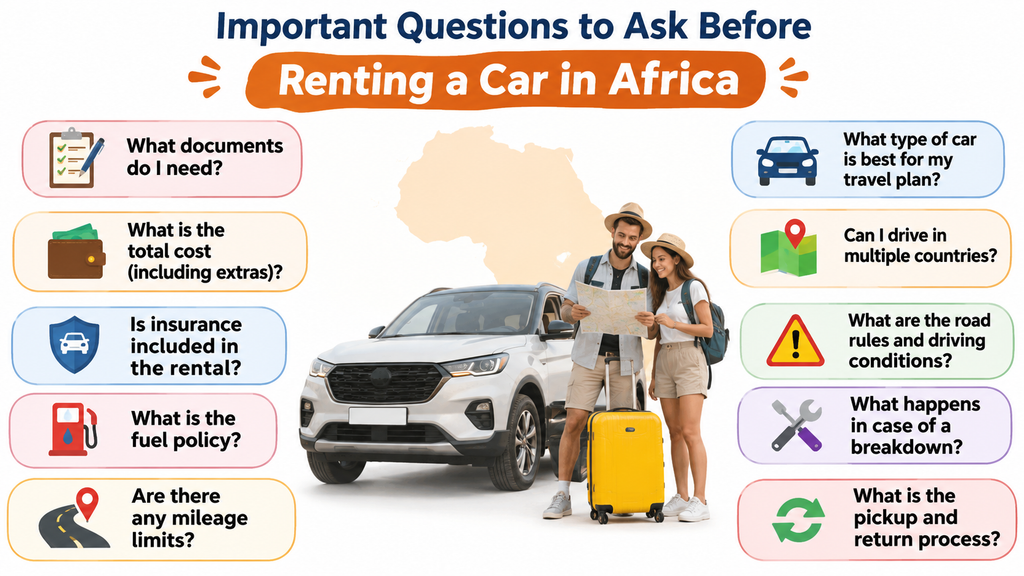
That is why asking questions before booking is important. This guide explains what every traveler should check before renting a car in Africa. It also covers rental prices, vehicle types, safety advice, and common mistakes.
Why Should You Ask Questions Before Renting a Car?
A rental car can make your journey more convenient. However, unclear rental conditions can create problems during your trip.
Some companies advertise attractive prices but charge extra for insurance, additional drivers, mileage, or vehicle delivery. Other providers may have strict rules about fuel, travel areas, and return times.
Asking questions helps you understand what you are paying for.
Here are some important benefits of checking rental conditions in advance.
1. Better Budget Planning: You can understand the complete rental cost and avoid unexpected charges.
2. Improved Safety: You can check the vehicle’s condition and understand available emergency support.
3. Clear Rental Conditions: You can learn about mileage limits, fuel rules, and return policies.
4. Suitable Vehicle Selection: You can choose a car that matches your passengers, luggage, and travel route.
5. Fewer Booking Problems: You can confirm document requirements and payment conditions before collection.
6. Better Travel Planning: You can check whether the company allows your planned destinations and routes.
A little preparation can make your rental experience easier and more predictable.
15 Important Questions to Ask Before Renting a Car
Before confirming a reservation, discuss the following questions with the rental provider.
1. What Is the Total Rental Cost?
The first question should concern the complete rental price.
Do not focus only on the advertised daily rate. Some companies add extra charges during the booking or vehicle collection process.
Ask whether the quoted price includes:
- Basic insurance.
- Taxes and service fees.
- Standard mileage allowance.
- Vehicle maintenance.
- Roadside assistance.
- Additional driver charges.
- Vehicle delivery and collection.
For example, a tourist renting a car in Johannesburg should compare the complete price before selecting a provider.
Request a written cost breakdown. This helps you understand the final amount before making payment.
2. Which Documents Do I Need?
Rental companies require documents to confirm your identity and driving eligibility.
Requirements differ between countries and rental providers. International travelers may need additional documents.
Common requirements include:
Valid Driving Licence: You need a valid licence that allows you to drive the selected vehicle category.
Passport: International visitors may need their passport for identity verification.
International Driving Permit: Some countries require an International Driving Permit alongside your original licence.
Proof of Address: Certain companies may request accommodation or residential details.
Payment Card: Some providers require a credit card for deposits and payments.
For example, tourists planning to rent a car in Morocco or South Africa should check the local driving requirements before arrival.
Always confirm the document rules with the rental company.
3. How Much Is the Security Deposit?
A security deposit is an amount that a rental company may hold during your booking.
The company may use it to cover eligible costs under the rental agreement. These can include vehicle damage, unpaid fees, or other contract-related charges.
Ask these questions before paying:
- What deposit amount do you require?
- Can I pay through a debit card?
- Is a credit card compulsory?
- When will you refund the deposit?
- Under what conditions can you deduct money?
For instance, a traveler renting a car in Accra should understand the deposit policy before collecting the vehicle.
Keep a record of the payment and refund conditions.
4. What Insurance Does the Rental Include?
Insurance can protect renters against certain financial losses.
However, not every rental package provides the same coverage. Some companies include basic insurance, while others offer optional protection packages.
Ask the provider:
- Does the rental price include insurance?
- Does the policy cover theft?
- Does it cover accident-related damage?
- What is the insurance excess?
- Are tyres and windows included?
- Does the policy cover additional drivers?
- Are there restrictions on certain roads?
For example, someone planning a road trip through Namibia should check the insurance rules for gravel roads and remote routes.
Read the insurance conditions carefully. Never depend only on verbal explanations.
5. Is There a Daily or Total Mileage Limit?
Mileage limits can affect the cost of longer journeys.
Some companies provide unlimited mileage. Others allow only a fixed distance per day or rental period.
Ask about:
- Daily mileage allowance.
- Total rental distance.
- Extra mileage charges.
- Unlimited mileage options.
Imagine you plan to travel from Cape Town towards the Garden Route. A limited mileage package may increase your final expenses.
Choose a rental plan that matches your expected driving distance.
6. What Fuel Policy Does the Company Follow?
Fuel policies explain how much fuel you must return with the vehicle.
Different providers follow different arrangements.
The most common options include:
- Full-to-full: Collect the car with a full tank and return it full.
- Same-to-same: Return the vehicle with approximately the same fuel level.
- Prepaid fuel: Pay for the fuel before collecting the vehicle.
- Fuel replacement charges: Pay the provider for missing fuel.
A full-to-full policy often makes fuel expenses easier to track.
Before driving away, check the fuel gauge and record the starting level.
7. Can I Travel Outside the Pickup City?
Some rental companies restrict where renters can drive.
These restrictions may cover remote areas, border crossings, certain roads, or specific regions.
For example, a traveler collecting a car in Nairobi may want to visit destinations outside the city.
Ask whether your planned route falls within the rental agreement.
Also confirm whether the company allows:
- Long-distance travel.
- Cross-border journeys.
- Gravel-road driving.
- Travel into remote areas.
- Overnight parking outside the pickup city.
Request written permission for any special travel arrangements.
8. What Support Is Available During a Breakdown?
A breakdown can interrupt your journey, especially when you travel outside major cities.
Ask the rental provider about its emergency support service.
Find out whether it offers:
- Roadside assistance.
- Towing support.
- Vehicle replacement.
- Mechanical repair assistance.
- Emergency telephone support.
- Support outside normal business hours.
For example, travelers exploring rural areas of Tanzania should know how to contact the rental provider during an emergency.
Save the emergency number before starting your trip.
9. Can I Add Another Driver?
Sharing driving responsibilities can make long journeys more comfortable.
However, rental companies may require every driver to register before using the vehicle.
Ask whether additional drivers are allowed.
Also check whether the company requires extra documents or charges an additional fee.
Never allow an unregistered person to drive the vehicle. This may create insurance and agreement problems.
10. What Is the Cancellation Policy?
Travel plans can change unexpectedly.
Your flight may get delayed, your schedule may change, or an emergency may affect your journey.
Therefore, understand the cancellation and refund rules before booking.
Ask:
- Can I cancel my reservation?
- Is cancellation free?
- How much notice must I provide?
- Can I change my booking date?
- What happens if my flight is delayed?
- How long does a refund take?
Read the cancellation terms before making a payment.
11. What Is the Vehicle’s Current Condition?
A vehicle inspection helps protect both the renter and the owner.
Before accepting the car, inspect its exterior and interior.
Check the following:
- Scratches and dents.
- Tyre condition.
- Windscreen damage.
- Headlights and indicators.
- Side mirrors.
- Seat belts.
- Brakes and steering.
- Dashboard warning lights.
Take photographs of existing damage.
Ask the provider to record these issues in the vehicle inspection report.
Do not accept a car with serious mechanical or safety problems.
12. Is There a Minimum or Maximum Rental Period?
Some companies offer flexible rental periods. Others require a minimum booking duration.
Ask whether you can rent a vehicle for a few hours, one day, several days, or multiple weeks.
Also confirm the rules for extending your booking.
For example, a business traveler visiting Lagos may need a car for several working days. A tourist may only need one for a weekend.
Choose a rental period that matches your schedule.
13. What Happens If I Return the Car Late?
Late returns may result in extra charges.
Some companies offer a short grace period. Others calculate additional costs based on hourly or daily rates.
Ask about the return deadline and late-return policy.
Also confirm whether you can return the car outside normal business hours.
If your flight or travel schedule changes, contact the rental company early.
14. Are There Any Restrictions on Vehicle Use?
Rental agreements may include rules about how you can use the vehicle.
These rules can cover driving locations, passenger numbers, commercial activities, and vehicle modifications.
Ask whether the company allows:
- Long-distance road trips.
- Driving on unpaved roads.
- Cross-border travel.
- Additional passengers.
- Business-related journeys.
- Roof racks or other equipment.
Understand these restrictions before booking.
15. Which Emergency Documents and Contact Details Should I Keep?
Before leaving, ask the provider which documents you should carry.
You may need access to:
- Rental agreement.
- Driving licence.
- Vehicle registration information.
- Insurance details.
- Emergency contact number.
- Roadside assistance information.
Keep these details accessible throughout your journey.
Also understand the local process for reporting accidents and contacting emergency services.
Which Rental Car Is Best for Your Travel Needs?
Choosing the right vehicle can improve comfort and help control your budget.
Your choice should depend on the destination, road conditions, number of passengers, and luggage requirements.
Economy Cars
Economy cars suit solo travelers, couples, and small groups.
They can work well for city sightseeing and short journeys.
Consider an economy car when you want a practical vehicle without paying for unnecessary space.
Compact Cars
Compact cars offer a balance between size and comfort.
They can suit travelers who need more room than a small economy car provides.
They are useful for daily transportation and general city travel.
Sedans
Sedans offer comfortable seating and a separate luggage compartment.
They can suit business travelers, couples, and families with moderate luggage.
They may also work well for longer journeys on suitable roads.
SUVs
SUVs provide additional passenger and luggage space.
Some models also offer greater ground clearance.
They can suit family holidays and road trips, but check their actual road capabilities before booking.
4×4 Vehicles
Four-wheel-drive vehicles can help with certain challenging routes.
They may suit specific safari journeys and remote destinations.
However, a 4×4 does not automatically permit off-road driving. Confirm the rental company’s restrictions and insurance conditions.
Luxury Cars
Luxury cars offer premium interiors and additional comfort features.
They may suit special occasions, executive travel, and business meetings.
Check the deposit, insurance, and rental conditions carefully.
How Much Does Car Rental Cost in Africa?
Car rental prices differ across African countries.
The final price depends on the vehicle, rental duration, location, season, insurance, and provider.
The following figures are illustrative budgeting ranges, not verified average prices or live rental quotations.
| Vehicle Type | Illustrative Daily Budget |
|---|---|
| Economy car | $25–$60 |
| Compact car | $30–$70 |
| Sedan | $40–$90 |
| SUV | $60–$150 |
| 4×4 vehicle | $80–$200+ |
| Luxury car | $100–$300+ |
Prices can vary significantly between Cape Town, Nairobi, Marrakech, Accra, and other destinations.
Some companies may also charge extra for airport collection, additional drivers, insurance upgrades, and vehicle delivery.
Practical Ways to Reduce Rental Expenses
You do not need to choose the cheapest vehicle to save money.
Instead, compare the total cost and select a rental package that meets your needs.
1. Book in Advance: Compare available options before your travel date.
2. Select the Right Vehicle: Avoid paying for extra space or features you do not need.
3. Compare Insurance: Understand what the basic package covers before purchasing additional protection.
4. Check Mileage Rules: Choose unlimited mileage if your journey requires extensive driving.
5. Review Extra Charges: Ask about delivery fees, additional drivers, and late-return costs.
6. Choose Suitable Rental Dates: Check whether longer bookings offer better daily rates.
7. Return the Vehicle on Time: Follow the agreed return schedule to avoid extra charges.
Important Safety Tips for Rental Car Users in Africa
Road conditions and driving regulations differ across African countries.
First-time visitors should learn local driving rules before collecting a rental vehicle.
Learn the Local Driving Rules
Check the correct driving side, speed limits, road signs, and licence requirements.
Some African countries drive on the left, while others drive on the right.
Never assume that driving rules remain the same across borders.
Always Wear Seat Belts
Make sure every passenger wears a seat belt.
Check that all belts work before starting the journey.
Avoid Unnecessary Night Driving
Unfamiliar roads can become harder to navigate after dark.
Limited street lighting and poor visibility may increase driving risks.
Plan longer journeys during daylight whenever possible.
Check Weather and Road Conditions
Heavy rain, flooding, and poor road surfaces can affect travel safety.
Check local conditions before leaving.
Change your route when authorities advise against travel.
Keep Emergency Supplies
Carry useful items such as drinking water, a phone charger, a first-aid kit, and emergency contact details.
Also keep your rental agreement and driving documents accessible.
Park in Suitable Areas
Choose legal and secure parking locations.
Do not leave valuable items visible inside the vehicle.
Follow local parking rules to avoid fines or vehicle security problems.
Car Rental vs Public Transport vs Taxi
Travelers can choose different transportation options depending on their destination and budget.
A rental car offers flexibility, while public transport can reduce costs. Taxis provide convenient transportation for shorter journeys.
The following table explains the main differences.
| Comparison Factor | Rental Car | Public Transport | Taxi |
|---|---|---|---|
| Cost | Moderate to high | Usually low | Moderate to high |
| Convenience | High | Depends on routes and schedules | High |
| Flexibility | High | Limited | Moderate |
| Comfort | Depends on vehicle | Varies by service | Depends on vehicle |
| Travel Experience | Independent exploration | Local travel experience | Direct transportation |
| Best Use Cases | Road trips and family holidays | Budget city travel | Short trips and airport transfers |
When Is Renting a Car a Better Choice?
A rental car can suit travelers who want to explore several places independently.
It can also help families carry luggage and manage their travel schedules.
For example, visitors exploring Cape Town and nearby attractions may prefer a rental car for greater flexibility.
When Should You Use Public Transport?
Public transport can help travelers reduce daily transportation expenses.
It may work well in cities with suitable bus, train, or metro networks.
However, check operating hours, routes, and local travel conditions.
When Are Taxis More Convenient?
Taxis can suit short journeys, airport transfers, and travelers who do not want to drive.
They can also help visitors reach destinations that public transport does not serve directly.
However, frequent taxi journeys may cost more than expected.
How MotoShare Africa Can Help Travelers
Finding a suitable rental vehicle is an important part of travel planning.
MotoShare Africa focuses on vehicle rental and vehicle-sharing opportunities. Its intended audience includes tourists, local residents, business travelers, and people who need flexible transportation.
A vehicle rental marketplace can help users explore different options before making a booking.
Easy Online Booking
Online booking can make the rental process more convenient.
Travelers can explore available vehicles and review relevant booking details before confirming their reservations.
This can reduce the need for repeated in-person enquiries.
Different Vehicle Choices
Every traveler has different transportation requirements.
Some people need compact cars for city travel. Others may prefer larger vehicles for family holidays and longer journeys.
Access to different vehicle categories can help users compare suitable options.
Clear Rental Information
Understanding rental conditions is important before making payment.
Users should review the displayed prices, deposit requirements, insurance details, and rental restrictions.
Clear information helps travelers make more confident decisions.
Connecting Renters With Vehicle Owners
Vehicle-sharing platforms can connect renters with local vehicle owners.
This approach can give users access to different vehicle options while creating opportunities for vehicle owners.
Always check the provider’s available verification details and rental conditions.
Flexible Rental Options
Travel schedules can differ from one person to another.
A tourist may need a car for a weekend, while a working professional may require one for a longer period.
Flexible booking options can help travelers plan according to their needs.
Supporting Convenient Travel
A rental vehicle can make it easier to explore destinations without depending entirely on public transport schedules.
Before choosing MotoShare Africa, check the actual service areas, vehicle availability, and booking conditions.
Visit the platform to explore the rental options available for your next journey.
Frequently Asked Questions About Renting a Car in Africa
1. What Are the Most Important Questions to Ask Before Renting a Car?
Ask about the total price, insurance, security deposit, fuel policy, mileage allowance, and cancellation rules.
Also confirm the required documents, vehicle condition, roadside assistance, and travel restrictions.
These details help you understand the rental agreement.
2. Can Tourists Rent a Car in Africa?
Yes, tourists can rent cars in many African countries.
However, rental requirements depend on the destination and provider.
International visitors may need a valid driving licence, passport, and International Driving Permit.
3. Is an International Driving Permit Necessary?
An International Driving Permit may be necessary for foreign visitors in certain countries.
Requirements depend on local laws, the visitor’s original licence, and rental company policies.
Confirm the rules before travelling.
4. How Much Does It Cost to Rent a Car in Africa?
Rental prices vary by country, vehicle type, and rental duration.
As an illustrative budget, economy cars may cost around $25–$60 per day. Larger vehicles usually cost more.
Request a complete quotation before booking.
5. Do Rental Companies Provide Insurance?
Many rental companies include basic insurance in their packages.
However, coverage and exclusions differ between providers.
Ask about theft protection, accident coverage, excess charges, and additional protection options.
6. Can I Rent a Car Without Paying a Deposit?
Some providers may offer different deposit arrangements.
However, many rental companies require a security deposit.
Ask about deposit alternatives and payment conditions before confirming your booking.
7. Are Additional Drivers Allowed?
Many rental companies allow additional drivers.
However, they may require separate document checks and additional fees.
Make sure every driver appears in the rental agreement.
8. What Should I Do If My Rental Car Breaks Down?
Move to a safe location if possible and contact the rental provider.
Follow its instructions for roadside assistance, towing, or vehicle replacement.
Do not arrange expensive repairs without approval.
9. Can I Drive a Rental Car Into Another Country?
Some rental companies allow international travel.
Others restrict border crossings because of insurance and registration conditions.
Always request written permission before crossing a border.
10. Can I Extend My Car Rental Booking?
Some providers allow rental extensions.
However, availability and additional charges may apply.
Contact the rental company before your scheduled return time.
11. Should I Take Photos Before Collecting a Rental Car?
Yes, taking photographs is a useful precaution.
Capture existing scratches, dents, tyre condition, and other visible damage.
Ask the provider to record these issues in the inspection report.
12. Which Car Is Best for an African Road Trip?
The best vehicle depends on your destination and road conditions.
Economy cars can suit city travel. SUVs may offer more passenger space.
Certain remote routes may require a suitable 4×4 vehicle. Always confirm the rental restrictions.
13. What Happens If I Return a Rental Car Late?
The company may charge additional fees for late returns.
Charges depend on its rental agreement and grace period.
Contact the provider early if your return schedule changes.
14. Is It Better to Rent a Car or Take a Taxi?
A rental car can offer more flexibility for longer journeys and multiple destinations.
Taxis may be better for short trips and airport transfers.
Compare the expected total cost before deciding.
15. What Should I Do After a Rental Car Accident?
Move to safety and check whether anyone needs medical attention.
Contact local emergency services when necessary. Inform the rental provider and follow its accident-reporting process.
Keep photographs and relevant incident details for your records.
Conclusion
Renting a car can make travel across Africa more comfortable and flexible. It allows visitors to explore destinations at their own pace and plan journeys around their needs.However, a good rental experience starts with asking the right questions.Before booking, check the rental price, insurance, deposit, fuel policy, mileage limits, and cancellation conditions. Also, inspect the vehicle and understand the local driving rules.Choose a vehicle that matches your travel plans. A compact car may suit city visits, while an SUV or suitable 4×4 may work better for certain longer journeys.Most importantly, read the rental agreement carefully and keep emergency contact details available.
