Introduction
Renting a car makes traveling across India easier and more comfortable. It gives you freedom to explore new places at your own pace. You can plan your route, stop whenever you want, and enjoy your journey.
However, collecting a rental car involves more than checking its appearance. You must inspect the vehicle before driving it. Even a small problem can cause trouble during your trip.
A damaged tyre, faulty brake, broken light, or missing document can affect your safety. It can also lead to unexpected expenses or disputes with the rental provider.
A proper rental car inspection checklist helps you avoid these problems. It allows you to identify existing damage and check important vehicle parts. You can also confirm the rental terms before leaving.
This guide explains everything you should inspect before driving a rental car in India. It covers vehicle condition, safety equipment, documents, insurance, fuel policies, and common mistakes.
Whether you are a tourist, student, working professional, or first-time renter, these checks can make your journey safer.
The guide also explains how bike rental services help travelers explore Indian destinations conveniently and affordably.
Why Is a Rental Car Inspection Important Before Driving?
A vehicle may look clean and attractive from the outside. However, its mechanical condition may tell a different story.
An inspection helps you understand the actual condition of your rental car. It also protects you from paying for damage that existed before your booking.
Here are the main reasons to inspect a rental vehicle.
1. Identify Existing Vehicle Damage
Check the car for scratches, dents, broken mirrors, and damaged windows. Take photographs of every visible problem.
Share these details with the vehicle owner or rental provider. Ask them to record the damage before you collect the keys.
This step can prevent disagreements when you return the vehicle.
2. Improve Road Safety
A rental car must have working brakes, tyres, lights, and steering. These parts help you control the vehicle in different road conditions.
Inspecting them before departure reduces the risk of avoidable problems.
3. Avoid Unexpected Repair Charges
Some rental agreements make customers responsible for certain types of damage.
Without proper inspection records, you may face questions about existing scratches or dents. Photographs and written confirmation can help protect your interests.
4. Confirm Vehicle Documents
Check the required registration, insurance, and other vehicle papers. Make sure the vehicle meets applicable legal requirements.
Also confirm that your driving licence is valid for the vehicle category.
Who Should Follow a Rental Car Inspection Checklist?
Every person renting a vehicle should inspect it before driving. However, these checks become especially important for certain travelers.
First-Time Travelers
First-time renters may not know what to check before collecting a vehicle. A simple checklist helps them avoid missing important details.
Tourists Exploring Indian Cities
Tourists often rent cars for sightseeing and longer journeys. They may travel through unfamiliar roads and changing traffic conditions.
A proper inspection helps them start their journey with greater confidence.
Students and Working Professionals
Students may rent cars for weekend trips, college events, or temporary transport needs.
Working professionals may need rental vehicles for business meetings, office travel, and outstation journeys.
Backpackers and Budget Travelers
Budget travelers often compare different vehicle options before booking. They should inspect the vehicle carefully to avoid unexpected costs.
For shorter journeys, renting a scooter or commuter bike may also provide an affordable alternative.
Complete Rental Car Inspection Checklist Before Driving
Before leaving the pickup location, inspect the vehicle from top to bottom. Do not rush through the process.
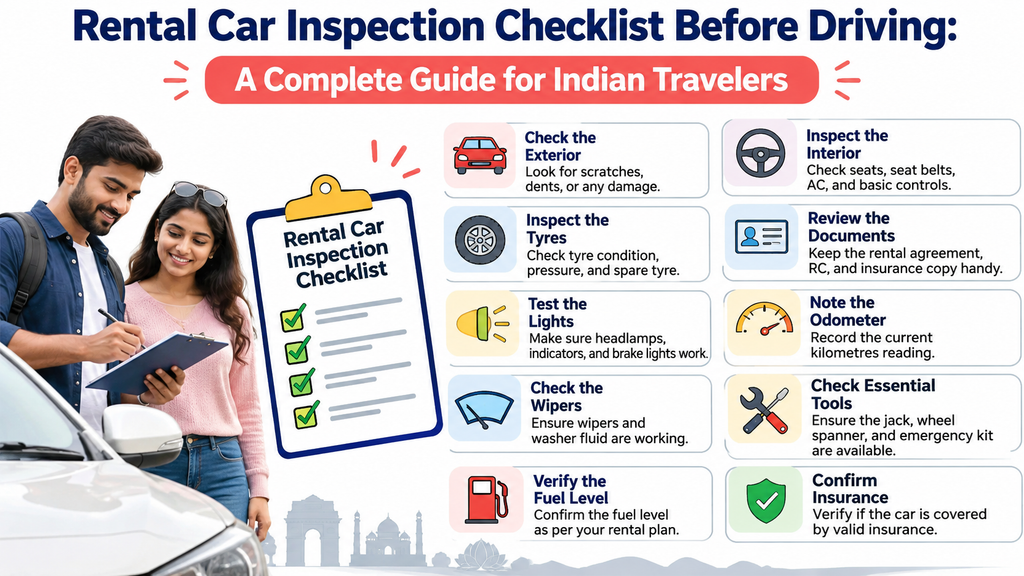
Use the following checklist to examine important parts of your rental car.
1. Inspect the Exterior Body
Start with a complete walkaround of the vehicle.
Check the following areas:
- Front and rear bumpers.
- All four doors and side panels.
- Bonnet and boot.
- Side mirrors.
- Windscreen and other windows.
- Door handles.
- Roof and visible body panels.
- Number plates.
- Paint condition.
Look for dents, scratches, cracks, and loose parts.
Take clear photographs from different angles. Make sure your pictures show both existing damage and the vehicle’s overall condition.
Ask the rental provider to record every visible issue.
2. Check the Tyres and Wheels
Tyres affect braking, steering, and overall vehicle control. Poor tyre condition can become dangerous during long journeys.
Inspect all four tyres before departure.
Check for:
- Visible cuts and cracks.
- Uneven tyre wear.
- Bulges on the sidewalls.
- Low tyre pressure.
- Damaged wheel rims.
- Missing wheel nuts.
Also locate the spare tyre. Check whether it has enough air and appears suitable for emergency use.
Confirm that the vehicle includes a jack and wheel-changing tools.
If you notice serious tyre damage, request another vehicle or ask the provider to resolve the issue.
3. Test the Brakes
Brakes are among the most important safety features in any vehicle.
Start the engine and check whether the brake warning light behaves normally. Press the brake pedal and notice whether it feels unusually soft or hard.
During a short and safe test drive, check for:
- Unusual braking sounds.
- Vehicle pulling to one side.
- Strong vibration during braking.
- Delayed braking response.
- Warning lights on the dashboard.
Never continue driving if the brakes feel unsafe.
Inform the rental provider immediately and request a suitable replacement.
4. Check Headlights, Indicators, and Other Lights
Working lights help you see the road and communicate with other drivers.
Test all the vehicle lights before departure.
Check these components:
- Headlights.
- High-beam lights.
- Low-beam lights.
- Tail lights.
- Brake lights.
- Left and right indicators.
- Reverse lights.
- Hazard warning lights.
- Number plate lights.
Ask someone to stand outside and confirm that each light works.
This check is especially important if you plan to drive at night or through areas with limited street lighting.
5. Inspect the Windscreen and Wipers
A clear windscreen improves visibility in different weather conditions.
Look for cracks, chips, and deep scratches. Even small damage can affect visibility.
Next, test the windshield wipers and washer system.
Make sure the wipers move smoothly and remove water properly.
This check matters during monsoon travel in Mumbai, Goa, Kolkata, and other rainy regions.
6. Examine the Interior
A clean interior makes your journey more comfortable. It also helps you identify existing damage.
Inspect the following areas:
- Front and rear seats.
- Seat belts.
- Dashboard.
- Steering wheel.
- Floor mats.
- Door panels.
- Interior lights.
- Windows and locks.
- Air conditioning.
- Music system, if included.
Check for broken seat adjustments, loose parts, unpleasant smells, and visible stains.
Confirm that all seat belts work correctly. Do not accept a vehicle with faulty seat belts.
7. Check Dashboard Warning Lights
The dashboard provides important information about vehicle health.
Start the engine and observe the warning lights.
Pay attention to warnings related to:
- Engine performance.
- Battery.
- Engine temperature.
- Oil pressure.
- ABS braking system.
- Tyre pressure.
- Airbags.
Some warning lights appear briefly during startup. However, warning lights that remain on may indicate a problem.
Ask the provider to explain any warning you do not understand.
Do not ignore serious warnings before starting your trip.
8. Test the Air Conditioning and Engine
India experiences hot weather in many regions. Therefore, a working air conditioning system can make a major difference.
Turn on the AC and check whether it cools the cabin properly.
Also listen to the engine while it runs.
Look for unusual sounds, excessive smoke, fluid leaks, or signs of overheating.
If anything seems unusual, contact the rental provider before leaving.
9. Check Fuel Level and Fuel Policy
Check the fuel gauge before accepting the vehicle.
Take a photograph showing the fuel level. Confirm whether the car comes with a full tank or a partial tank.
Ask the provider about the return fuel policy.
Some providers expect the same fuel level at return. Others may follow different arrangements.
Understand these conditions before signing the rental agreement.
10. Verify Emergency Equipment
Emergency equipment can help during unexpected situations.
Check whether the vehicle includes:
- Spare tyre.
- Jack and wheel spanner.
- First-aid kit.
- Warning triangle.
- Basic tool kit.
- Vehicle emergency contact details.
Availability may vary by vehicle and rental provider.
Ask about roadside assistance and breakdown support before starting your journey.
Documents to Check Before Driving a Rental Car in India
Vehicle inspection is not complete without checking the necessary documents.
Both the renter and the rental provider should understand their responsibilities.
1. Valid Driving Licence
Carry a valid driving licence that covers the vehicle category.
For Indian residents, the licence must meet applicable legal requirements.
Foreign visitors should check whether their home-country licence and an International Driving Permit are accepted for driving in India.
2. Vehicle Registration Certificate
Check the vehicle’s Registration Certificate (RC).
The registration details should match the vehicle’s number plate.
Confirm that the vehicle has the correct registration status for its intended rental use.
3. Insurance Certificate
Ask the rental provider to confirm the vehicle’s insurance coverage.
Understand what the policy covers and what it excludes.
Also ask whether the insurance applies to the intended rental arrangement and authorized driver.
4. Pollution Under Control Certificate
Check whether the vehicle has a valid Pollution Under Control (PUC) certificate, where required.
This document confirms that the vehicle meets applicable emission standards.
5. Government ID Proof
Rental providers may request identity documents before handing over a vehicle.
Common examples include:
- Aadhaar card.
- Passport.
- Voter ID.
- Other accepted government identification.
Requirements can vary between providers.
6. Rental Agreement and Security Deposit
Read the rental agreement before accepting the vehicle.
Check the following details:
- Booking duration.
- Pickup and return locations.
- Rental charges.
- Security deposit.
- Late return charges.
- Mileage limits.
- Fuel conditions.
- Damage responsibilities.
- Cancellation terms.
Ask for a receipt or confirmation of any security deposit.
Important Things to Confirm Before Collecting a Rental Car
A vehicle may pass its physical inspection but still have unsuitable rental conditions.
Therefore, review the booking details before accepting the keys.
Understand the Fuel Policy
Confirm whether fuel costs are included in the rental price.
Ask whether you must return the vehicle with the same fuel level.
Check Insurance Coverage
Understand the insurance policy, exclusions, excess amount, and damage responsibilities.
Do not assume that every type of accident or damage receives full coverage.
Confirm Mileage Limits
Some rental providers offer unlimited mileage. Others set daily or total distance limits.
Ask about extra kilometre charges before planning a long journey.
Confirm Driver Restrictions
Check who can legally and contractually drive the rental vehicle.
Some agreements allow only the registered renter to drive.
Do not let an unauthorized person use the vehicle.
Understand the Breakdown Policy
Ask what happens if the car stops working during your journey.
Confirm whether roadside assistance, towing, or replacement vehicles are available.
Keep the provider’s emergency number saved on your phone.
Safety Tips for Driving a Rental Car in India
Indian roads can present different challenges. Traffic, road quality, weather, and driving habits vary between cities and rural areas.
Follow these practical safety tips.
Follow Traffic Rules
Follow speed limits, traffic signals, lane rules, and parking restrictions.
Keep your driving licence and required vehicle documents accessible.
Avoid using your mobile phone while driving.
Always Wear a Seat Belt
Wear your seat belt before starting the engine.
Make sure passengers use their seat belts too.
Never overload the vehicle beyond its permitted seating capacity.
Avoid Overspeeding
Drive at a safe speed according to road conditions.
Slow down near schools, markets, intersections, and crowded areas.
Keep a safe distance from other vehicles.
Check Weather and Road Conditions
Rain can reduce visibility and increase braking distance.
During monsoon travel, check for waterlogged roads and possible diversions.
If conditions become unsafe, stop at a suitable location.
Keep Emergency Contacts Handy
Save the rental provider’s contact details.
Keep emergency numbers and roadside assistance information available.
Share your travel route with someone you trust during long journeys.
Why Renting a Bike in India Is Also a Smart Travel Choice
Cars work well for families, groups, and long-distance journeys. However, they may not suit every travel plan.
A bike or scooter offers another practical way to explore India.
Bike rental in India gives travelers more freedom on short trips. It can also help them avoid some parking and traffic challenges.
For example, travelers visiting Goa can explore beaches and nearby markets on scooters. Visitors in Jaipur can use bikes for local sightseeing.
In Bangalore and Pune, two-wheeler rental services may help commuters manage shorter daily journeys.
Benefits of Bike Rental for Tourists
Bike rental for tourists offers several practical advantages.
- Greater flexibility: You can plan your own routes and stops without depending on fixed transport schedules.
- Convenient city travel: Scooters and commuter bikes can help with shorter trips through busy urban areas.
- Budget-friendly options: Affordable bike rental India options may cost less than repeated taxi journeys.
- Local exploration: You can visit nearby markets, restaurants, beaches, and attractions at your own pace.
- More vehicle choices: Travelers can choose scooters, motorcycles, premium bikes, and adventure motorcycles.
If you want to travel in India by bike, choose a vehicle that matches your experience and route.
Types of Bikes You Can Rent in India
The right two-wheeler depends on your destination, travel distance, and riding experience.
Scooters
Scooters suit short city trips and everyday travel.
They work well for beginners who have the required licence and riding skills.
You can consider renting a scooter in Goa, Mumbai, Jaipur, or Chennai.
Commuter Bikes
Commuter motorcycles offer practical options for daily travel.
They generally suit city journeys and moderate distances.
They can also work for students and working professionals.
Sports Bikes
Sports bikes offer a different riding experience.
They may suit experienced riders who understand their handling and power.
Always check the vehicle condition and rental requirements.
Adventure Bikes
Adventure motorcycles suit riders planning longer trips and selected rough-road routes.
They may be useful for certain hill and countryside journeys.
Choose one only if you have suitable riding experience.
Cruiser Motorcycles
Cruiser motorcycles offer a relaxed riding position on suitable roads.
They may suit experienced riders planning scenic journeys.
Check the vehicle’s weight and handling before booking.
Electric Bikes
Electric bikes can work well for shorter journeys.
Before booking, check battery range, charging options, and charging time.
Make sure charging facilities are available along your planned route.
How to Choose the Right Rental Vehicle for Your Trip
Selecting the right vehicle can improve your travel experience.
Consider these factors before booking.
- Trip distance: Choose a comfortable vehicle for your expected daily distance.
- Passenger count: Select a car or suitable vehicle with enough legal seating capacity.
- Road conditions: Consider ground clearance, tyre condition, and vehicle handling.
- Budget: Compare rental charges, fuel, deposits, and extra fees.
- Driving experience: Choose a vehicle you can operate safely.
- Parking: Consider parking availability at your destination.
- Weather: Select a suitable vehicle for rain, heat, or colder conditions.
For example, a family visiting Hyderabad may prefer a car. A solo traveler exploring Goa may prefer a scooter.
Estimated Cost of Bike Rental in India
Rental prices depend on the city, vehicle model, season, rental duration, and provider.
The following figures are indicative planning estimates, not guaranteed market rates.
| Vehicle Type | Estimated Daily Rental Price |
|---|---|
| Scooters | Rs. 300–800 |
| Commuter Bikes | Rs. 400–1,000 |
| Premium Bikes | Rs. 1,000–3,000 |
| Adventure Bikes | Rs. 1,500–4,000 |
Actual prices may fall outside these ranges.
Before booking, compare the total cost rather than the daily rental price alone.
Check fuel charges, security deposits, mileage limits, delivery fees, and additional taxes.
For car rentals, prices also vary by vehicle type, transmission, city, and booking duration.
Common Mistakes First-Time Travelers Should Avoid
First-time renters sometimes focus only on the rental price. This can cause problems later.
Avoid these common mistakes.
- Skipping the vehicle inspection: Always inspect the car before leaving the pickup location.
- Ignoring existing damage: Photograph scratches, dents, and broken parts.
- Not reading the agreement: Understand deposits, mileage limits, and return conditions.
- Ignoring insurance details: Ask what the policy covers and excludes.
- Forgetting vehicle documents: Confirm that required documents are available and valid.
- Choosing the wrong vehicle: Match the vehicle to your route and driving experience.
- Ignoring tyre condition: Check tyre pressure, tread, and visible damage.
- Overlooking fuel rules: Confirm the fuel policy before departure.
- Driving without proper rest: Avoid long journeys when tired.
- Returning the vehicle late: Understand the return time and possible extra charges.
A few minutes of preparation can prevent many rental problems.
Bike Rental vs Public Transport vs Taxi
Different transport options suit different travel needs.
Your best choice depends on your budget, destination, passenger count, and travel plans.
| Comparison Factor | Bike Rental | Public Transport | Taxi |
|---|---|---|---|
| Cost | Often affordable for frequent short trips | Usually economical | Can become expensive with repeated trips |
| Convenience | High for suitable routes | Depends on routes and schedules | High when available |
| Flexibility | High | Limited by routes and timings | Moderate to high |
| Comfort | Depends on weather and bike type | Varies by service | Usually comfortable |
| Travel Experience | Offers independent exploration | Provides local travel experience | Offers direct transportation |
| Best Use Cases | Solo travelers, couples, short trips | Daily commuting and budget travel | Families, groups, airport transfers |
When Should You Choose Bike Rental?
Choose bike rental when you want flexible local travel.
It can suit solo travelers, backpackers, and people visiting nearby attractions.
When Is Public Transport Better?
Public transport works well for budget-conscious travelers.
It may also be a better choice in cities with strong metro, bus, or suburban rail networks.
When Should You Choose a Taxi?
Taxis suit families, groups, airport transfers, and journeys with heavy luggage.
They also help travelers who do not want to drive themselves.
How MotoShare Africa Can Help Travelers
Finding a suitable rental vehicle becomes easier when travelers can compare available options.
MotoShare Africa aims to support vehicle discovery and rental needs through a convenient platform approach.
For travelers exploring India, vehicle rental options can help meet different transport requirements.
Here are some useful features to look for when choosing a rental platform.
Easy Online Booking
Online booking can reduce the time spent contacting different rental providers.
Travelers can review available vehicles and booking details before making a decision.
Always confirm the final booking status before visiting the pickup location.
Wide Range of Vehicles
Different journeys need different vehicles.
A useful rental platform should offer options across suitable vehicle categories.
These may include scooters, commuter bikes, premium motorcycles, and cars.
Transparent Pricing
Clear pricing helps travelers plan their budgets.
Review the rental charge, deposit, mileage rules, and extra fees before confirming.
Do not assume that the displayed price includes every expense.
Verified Vehicle Owners
Vehicle owner verification can help improve trust between renters and providers.
However, renters should still inspect the vehicle and confirm its documents.
Always report damage before accepting the keys.
Flexible Rental Options
Travelers have different transport needs.
Some need a vehicle for a few hours. Others need one for several days.
Check which rental periods and return options the provider supports.
Availability Across Indian Cities
Travelers often need transport in different destinations.
Popular cities include Delhi, Mumbai, Bangalore, Goa, Jaipur, Pune, Hyderabad, Chennai, and Kolkata.
Check actual vehicle availability for your destination and travel dates before booking.
Final Rental Car Inspection Checklist Before Driving
Use this quick checklist before accepting your rental vehicle.
- Inspect the exterior for scratches and dents.
- Photograph existing vehicle damage.
- Check tyres and wheel condition.
- Test the brakes.
- Check headlights and indicators.
- Inspect the windscreen and wipers.
- Test seat belts and door locks.
- Check dashboard warning lights.
- Test the air conditioning.
- Confirm the fuel level.
- Check the spare tyre and emergency tools.
- Verify registration and insurance documents.
- Check the rental agreement.
- Confirm mileage and fuel policies.
- Save the rental provider’s emergency number.
Complete these checks before leaving the pickup location.
Frequently Asked Questions
1. Why should I inspect a rental car before driving?
A vehicle inspection helps identify existing damage and mechanical problems. It also helps prevent disputes about scratches, dents, and other issues during return.
2. What should I check first when collecting a rental car?
Start with the exterior, tyres, lights, brakes, and windscreen. Then inspect the interior, dashboard, fuel level, and required documents.
3. Can tourists rent a car in India?
Yes, tourists can rent cars in India if they meet the applicable driving licence and rental provider requirements. Foreign visitors should confirm their licence and permit requirements before booking.
4. Is an International Driving Permit required in India?
Foreign visitors may need an International Driving Permit, depending on their licence, country of issue, and applicable rules. Check the current requirements before driving.
5. How much does bike rental cost in India?
Scooters may cost around Rs. 300–800 per day. Commuter bikes may cost Rs. 400–1,000 per day. Premium and adventure bikes usually cost more.
Actual prices vary by city, model, season, and rental provider.
6. Are helmets provided with rental bikes?
Many rental providers offer helmets, but availability and quantity can vary. Confirm helmet availability and condition before collecting the bike.
7. Can I rent a bike without a security deposit?
Some providers may offer different deposit policies. However, many require a refundable security deposit.
Always confirm the amount, payment method, and refund conditions.
8. What happens if my rental car breaks down?
Contact the rental provider immediately. Follow their breakdown instructions and ask about roadside assistance or vehicle replacement.
Do not arrange major repairs without discussing responsibility and approval.
9. Can I take a rental car to another city?
Some providers allow intercity travel, while others restrict vehicle movement.
Check the agreement for distance limits, geographical restrictions, and additional charges before departure.
10. Can I rent a scooter in India as a tourist?
Yes, tourists can rent scooters if they meet the applicable licence and provider requirements.
Carry the required documents and wear a suitable helmet.
11. Should I photograph a rental car before driving?
Yes. Take photographs of the exterior, interior, dashboard, fuel gauge, and existing damage.
Share the photographs with the provider and request written confirmation of any issues.
12. What should I do if I notice damage after booking?
Inform the rental provider before driving. Share clear photographs and request written confirmation.
If the damage affects safety, ask for a suitable replacement vehicle.
13. Is bike rental better than taxi services in India?
Bike rental can be more affordable and flexible for suitable short journeys. Taxis may be better for families, heavy luggage, long transfers, and travelers who prefer not to drive.
Compare both options based on your travel needs.
14. What documents are usually needed to rent a bike in India?
Providers commonly request a valid driving licence and government ID proof. Some may also ask for address details and a security deposit.
Requirements vary by provider and vehicle category.
15. Can beginners rent premium or adventure bikes?
Beginners should choose a vehicle that matches their riding skills. Premium and adventure motorcycles can be heavy or powerful.
Check the rental conditions and practice safely before starting a longer journey.
Conclusion
A rental car can make traveling across India more comfortable and flexible. However, a safe journey starts before you turn the key.Always inspect the vehicle’s exterior, tyres, brakes, lights, and interior. Check the documents, insurance, fuel policy, and rental agreement. Take photographs of existing damage and report every issue.These simple steps can help you avoid unexpected expenses and improve your travel experience.If you prefer two-wheelers, bike rental offers another practical way to explore Indian destinations. From scooters in Goa to commuter bikes in Bangalore, the right rental vehicle can make local travel easier.MotoShare Africa can help travelers explore vehicle rental options for their journeys. Compare available vehicles, review rental conditions, and choose an option that suits your needs.
